
5 Ways to Cook With What You Have in Your Fridge
Why cooking with what you have in your fridge matters
Most households waste close to a third of the food they buy, often because new ingredients get purchased for specific recipes while what is already in the fridge or pantry goes untouched. A head of cabbage sits for two weeks. A half-used jar of tahini gets pushed to the back. Proteins freeze indefinitely because they were bought for a recipe that never got made.
Pantry cooking flips this pattern. Instead of starting with a recipe and shopping for it, you start with what is already in your kitchen and find meals that fit. It saves money, reduces waste, and often produces more interesting meals than following a fixed recipe to the letter because you are forced to improvise.
1. Take a quick inventory before you decide what to cook
Before you can cook with what you have, you need to know what you actually have. This sounds obvious but most people skip it entirely. Take two minutes to walk through your fridge, freezer, and pantry shelves before deciding what to make.
You are not building a spreadsheet. You are building a mental snapshot: what proteins do I have, what vegetables, what grains, what sauces and spices. A quick scan of three or four shelves is enough to spot the possibilities you might otherwise miss.
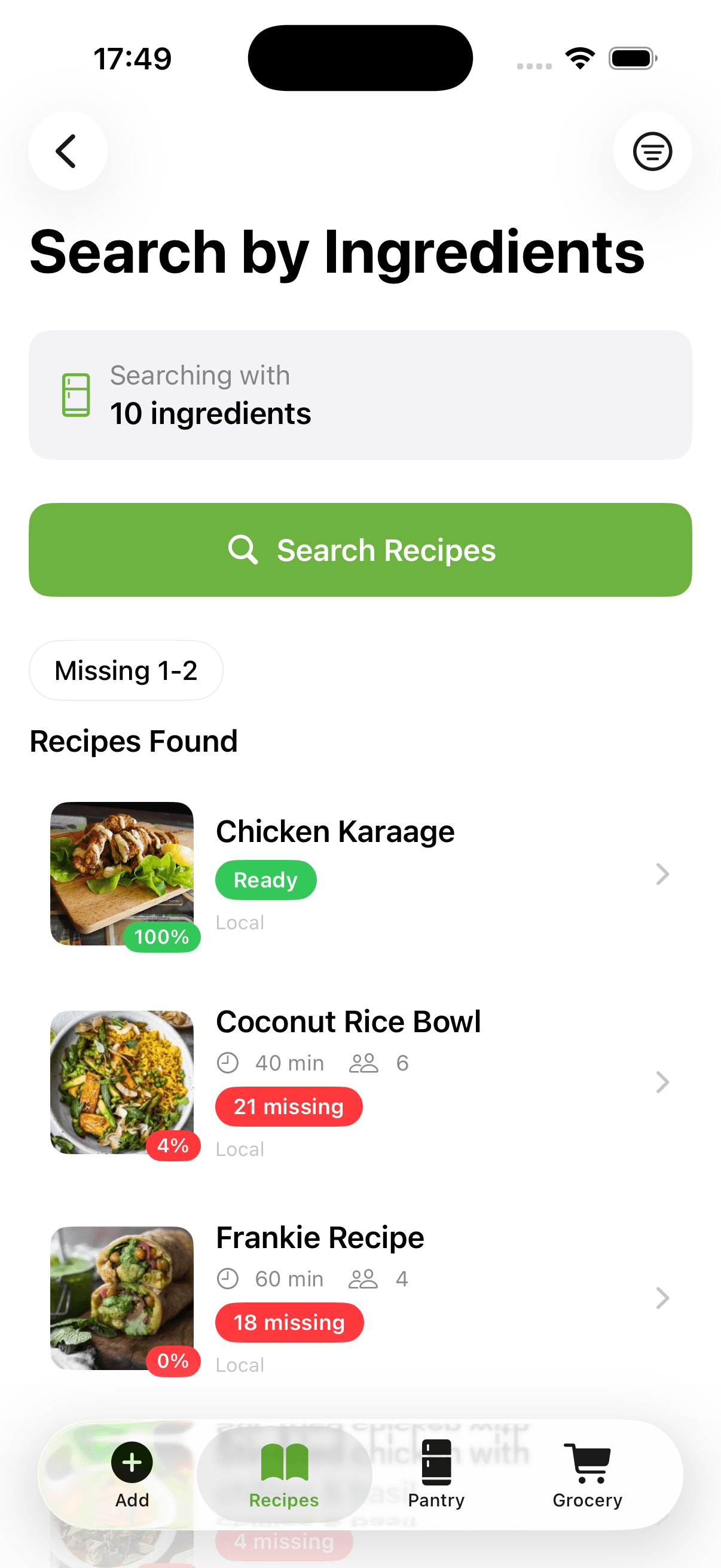
This habit transforms the frustrating feeling of 'there is nothing to eat' into a clear list of ingredients you can work with. When you pair this inventory habit with an app like CookFlic that tracks your pantry automatically, the matching happens for you — you open the app and see your highest-scoring recipes right away, ranked by how many ingredients you already have on hand.
2. Think in flavor profiles, not exact recipes
Recipe books are useful but they can also create a mental block. If you need seven specific ingredients and only have five, the recipe feels out of reach. The solution is to stop thinking recipe-first and start thinking flavor-first.
Every cuisine has a core set of flavors that hold a dish together. Soy sauce, garlic, and sesame oil mean Asian. Tomato, olive oil, and basil mean Italian. Cumin, lime, and chili mean Mexican. Once you internalize these flavor signatures, you can improvise. Got chicken, rice, and soy sauce? That is a stir-fry. Got canned tomatoes, garlic, and pasta? That is a basic pomodoro. The exact recipe is secondary to the flavor logic.
3. Master a few flexible base recipes
The most efficient way to always have something to cook is to master four or five recipes that absorb almost any ingredient combination.
Fried rice works with virtually any protein and vegetable you have on hand. A frittata accepts whatever is in your fridge — greens, cheese, onions, leftover potatoes. Soup is the great catch-all: almost any combination of vegetables, legumes, and aromatics becomes a satisfying bowl with good stock and seasoning. Grain bowls let you combine whatever cooked grain you have with any protein, raw or cooked vegetable, and a sauce. Stir-fry is the fastest of them all and forgives almost any combination of ingredients.
When you have these base recipes committed to memory, you stop needing to look up what to cook. You scan your fridge, identify the category — this is a soup situation, this is a stir-fry situation — and start cooking. The ingredients tell you the recipe.
4. Use substitution logic
Missing one ingredient should rarely stop you from making a dish. Most ingredient substitutions follow a simple logic: understand the role the ingredient plays, then find something in your kitchen that does the same job.
Yogurt and sour cream are interchangeable in most applications. Lemon juice replaces white wine vinegar. Any cooking oil substitutes for any other in most contexts. Honey replaces maple syrup. Breadcrumbs replace crackers as a topping. Canned chickpeas replace canned white beans in soups and stews.
The key question to ask is: what job does this ingredient do in the dish? Is it adding acidity? Fat? Texture? Sweetness? Find something in your pantry that does the same job and you will rarely need to run to the store for a single missing item.
5. Build a pantry baseline you can always rely on
One of the most effective ways to consistently cook with what you have is to maintain a small set of shelf-stable staples that turn almost any fresh ingredient into a complete meal. Think of this as your cooking baseline — the ingredients that are always present regardless of what else runs low.
A solid pantry baseline includes: olive oil, neutral cooking oil, salt and pepper, garlic (fresh or powdered), onions or shallots, dried pasta or rice, canned tomatoes, canned beans (chickpeas, black beans, or white beans), vegetable or chicken stock, soy sauce, vinegar, and a small set of dried herbs and spices — cumin, paprika, chili flakes, and oregano cover most cuisines.
With this baseline in place, any fresh protein or vegetable you buy becomes a complete meal. Chicken thighs plus pantry baseline equals a dozen possible dinners. A bag of spinach plus pantry baseline equals a pasta, a soup, or a grain bowl. You are rarely stuck. When you track this baseline in a recipe app, your match scores improve significantly — recipes that rely mostly on shelf-stable ingredients show up as high-match options even when your fridge is nearly empty.
6. Match recipes to your ingredients automatically
The fastest way to cook with what you have in your fridge is to stop searching manually through a long list of saved recipes. A tool like CookFlic does this automatically.
Log your pantry into the app — everything from the chicken in your freezer to the half-used jar of tahini in your fridge. Then browse your saved recipes sorted by match score. The app shows you which recipes use the most of what you already have, flagging the specific ingredients you might still need.
This approach makes pantry cooking the path of least resistance instead of something that requires mental effort. You open the app, see your best matches for tonight, and start cooking. The ingredients you already own stop going to waste because the app surfaces them as cooking opportunities before they expire.
Ready to cook with what you have?
CookFlic captures recipes from anywhere, matches them to your pantry, and guides you step-by-step. See all features →
DownloadFrequently Asked Questions
What should always be in my pantry for cooking?
A useful pantry baseline includes olive oil, salt and pepper, garlic, onions, dried pasta or rice, canned tomatoes, canned beans, stock, soy sauce, vinegar, and a small set of dried spices like cumin, paprika, and chili flakes. These ingredients combine with almost any fresh protein or vegetable to create a complete meal.
How do I know what I can make with the ingredients I have?
The easiest method is to list your available ingredients and search for matching recipes. Recipe apps like CookFlic automate this by scanning your pantry and ranking saved recipes by how many ingredients you already own — so the highest-scoring recipes require the fewest additional purchases.
What can I cook with just fridge leftovers?
Fried rice, frittatas, soups, grain bowls, and stir-fries are the most flexible options. These recipes absorb almost any combination of proteins, vegetables, and aromatics, making them ideal for using up whatever is left before your next grocery run.
How do I stop wasting food in my fridge?
Take a quick inventory before every grocery trip. Cook with whatever is expiring soonest. Keep a small pantry baseline of shelf-stable staples so any single fresh ingredient becomes a complete meal. Using an app that matches your pantry to saved recipes — like CookFlic — also reduces waste by surfacing cooking opportunities before ingredients expire.
Related articles
8 min read
How to Save, Scan, and Organize Recipes on iPhone
Save recipes from Safari, TikTok, and YouTube, scan cookbook pages with the camera, and store everything in one searchable library on your iPhone. A setup that sticks.
7 min read
Why Meal Planning Starts With Your Pantry
Stop planning meals you will not cook. The best way to meal plan from your pantry is to start with what you already have — not a list of recipes from a food blog.