
Why Meal Planning Starts With Your Pantry
The problem with recipe-first meal planning
Traditional meal planning advice has a flaw built into it: it starts with recipes.
Pick seven recipes for the week. Write down every ingredient. Buy everything you need. The logic is clean. The execution rarely is. You end up buying five ounces of a spice you will use once. You purchase a bag of kale for a salad you never get around to making. You buy chicken for Tuesday but Tuesday turns into takeout, and now you have protein going bad in the fridge by Thursday.
The deeper problem is that recipe-first planning ignores what you already own. You might already have half the ingredients for a great dinner sitting in your pantry, but starting with a fresh recipe list makes you invisible to that fact. You shop as if your kitchen is empty, which means you keep buying duplicates of things you already have.
Start with what you have
Pantry-first meal planning inverts the traditional sequence. Instead of picking recipes and then figuring out what to buy, you start by surveying what you already own and building your meals around that.
Before planning anything for the week, spend five minutes on a pantry audit. What proteins are in your freezer? What vegetables in your fridge are approaching their end? What canned goods, grains, and condiments are on your shelves? This takes almost no time but completely changes how you plan.
With that picture in mind, you look for recipes that use your existing ingredients first. You are not starting from scratch — you are maximizing what you already paid for. Only after you have identified meals that use your current stock do you add a short shopping list for the gaps. This shift in sequence is simple but the results compound over time: less food wasted, smaller grocery bills, and meals that actually get cooked because they fit your real fridge rather than an aspirational one.
Fill the gaps, not the cart
Once you know what you have, your grocery list becomes surgical instead of exploratory.
The goal is not to buy a full week of meals from scratch. The goal is to buy the six to ten specific ingredients that close the gap between what you have and what you want to cook. Maybe you have pasta, garlic, and olive oil but need a can of good tomatoes and a block of parmesan. That is a two-item list, not a full supermarket trip.
This changes your relationship with the grocery store. You go with a purpose and a short list. You spend less time browsing and more time cooking. The accidental impulse buy that goes unused for three weeks becomes less common because you are shopping to complete specific meals, not to stock a theoretical kitchen for an imaginary week.
Use match scores to build your meal plan
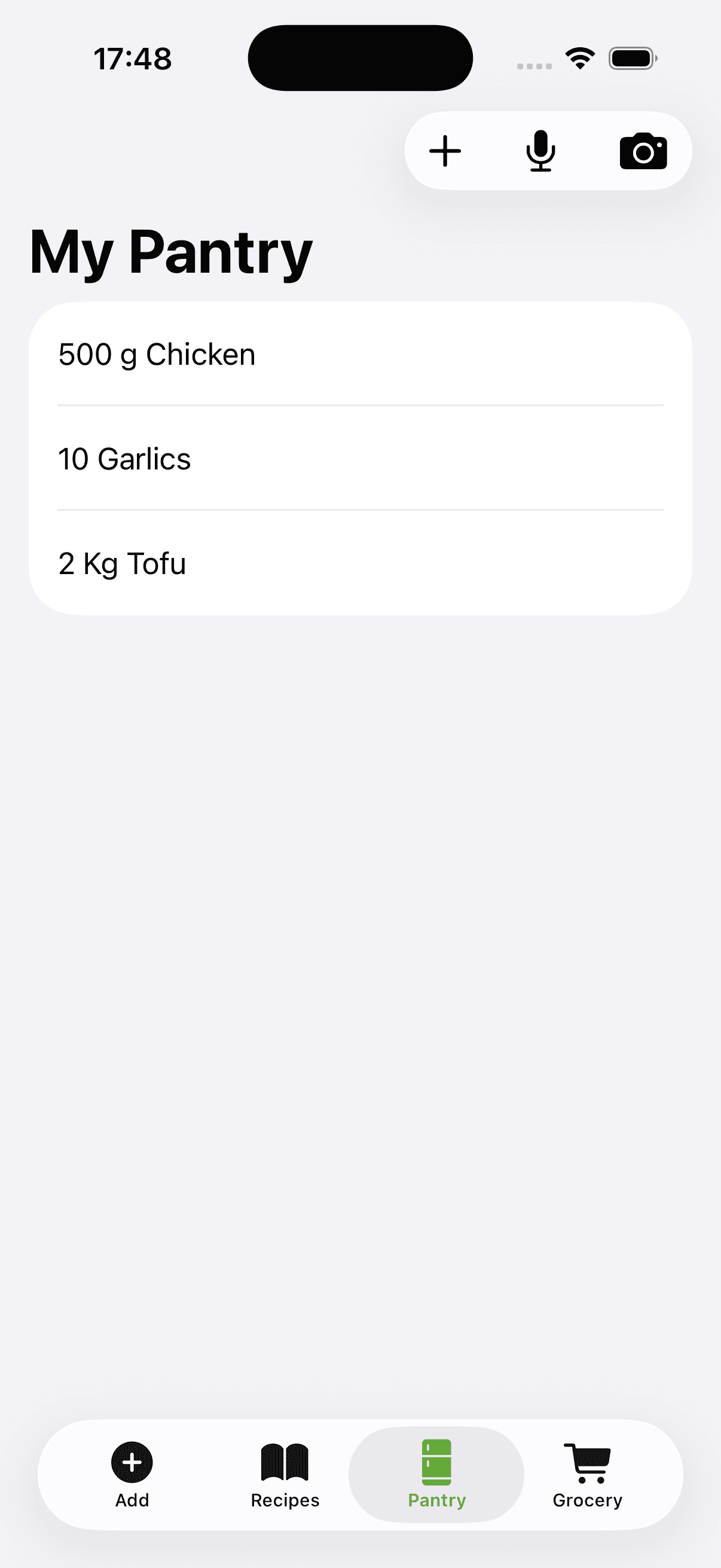
If you track your pantry in a recipe app, you can skip the manual matching entirely. CookFlic compares your pantry inventory against every saved recipe and assigns a match score based on what percentage of the required ingredients you already own.
Sort your recipes by highest match and your meal plan practically assembles itself. The top results are meals you can cook right now or with one or two additional items. The app also shows you exactly which ingredients are missing for each recipe, so your shopping list writes itself.
This approach works especially well mid-week when you have used up some of your planned meals and want to figure out what to do with whatever remains. Open the app, see what matches your current pantry state, and dinner is solved in under a minute.
How to handle fresh produce when you meal plan from pantry
Fresh produce is the variable that makes pantry-first meal planning feel harder than it is. Unlike shelf-stable pantry items, vegetables and fruits have deadlines. A bell pepper that was fine on Monday is wilting by Saturday.
The solution is to plan fresh produce meals early in the week and shelf-stable meals later. If you have spinach, broccoli, and a few tomatoes, those meals go on Monday and Tuesday. Pasta, canned tomatoes, and pantry proteins go on Thursday and Friday when the fridge is nearly empty.
Build your week's meal plan around the expiration order of your produce, not alphabetically or by cuisine. This single habit eliminates most fresh produce waste. When you update your pantry app as you cook, the match scores for later in the week automatically shift toward your remaining shelf-stable ingredients, reflecting your real kitchen state rather than what it was on Sunday.
Stop food waste: the case for pantry-first planning
Research consistently finds that households waste a significant portion of the food they purchase — much of it perishable food that was bought for a specific meal plan but never cooked.
Recipe-first planning contributes to this problem because it treats every week as a blank slate. You plan for an idealized version of your week — one where you have time and energy to cook every night and follow through on ambitious recipes — rather than planning around reality.
Pantry-first meal planning is inherently less wasteful because it prioritizes what you already own. You are cooking down your stock before buying more. You are treating your kitchen as a resource to use rather than a staging area for fresh groceries. Over time, this approach trains you to buy less and cook more of what you buy — which is the most effective form of food waste reduction available to a home cook.
Keep your pantry up to date
The accuracy of your pantry list determines the accuracy of everything that comes from it. A pantry list that shows three cans of chickpeas when you actually have zero gives you bad matches and sends you to the store for ingredients you already used.
Keeping the list current takes less effort than it sounds. Add items when you unpack groceries. Remove or reduce items after you cook. When you use the last of something, mark it as gone. Three seconds per item, a few times a week.
If you use a recipe app that links your grocery list to your pantry — like CookFlic — the update happens automatically when you check items off your shopping list. You shop, check things off in the app, and your pantry updates in the background. Your next set of match scores reflects your actual current stock, not what you had three weeks ago.
Ready to cook with what you have?
CookFlic captures recipes from anywhere, matches them to your pantry, and guides you step-by-step. See all features →
DownloadFrequently Asked Questions
How do you meal plan when your pantry is almost empty?
Start with what you have, no matter how little. Even a nearly empty pantry usually contains a shelf-stable base: pasta or rice, canned beans or tomatoes, oil, garlic, and spices. Plan one or two meals around that base, then write a short grocery list for exactly what you need to make those meals complete. Avoid starting from scratch with a fresh recipe list.
How do I meal plan from my pantry to save money?
Audit your pantry before making any shopping list. Plan meals around your highest-value existing ingredients — proteins in the freezer, vegetables approaching their end in the fridge — first. Only add items to your grocery list that complete a specific planned meal. This approach typically reduces grocery spend significantly compared to recipe-first planning.
How many meals should I plan per week?
Planning for four to five cooked meals per week is more realistic for most households than seven. This leaves room for leftovers, simple pantry meals, and the inevitable nights when cooking does not happen. Overplanning leads to more waste, not less.
What is the best app for pantry-based meal planning?
An app that tracks your pantry inventory and matches it against your saved recipes gives you the most useful starting point. CookFlic is designed specifically for this: add your pantry contents and the app scores every saved recipe by how many ingredients you already have, making it easy to plan meals around what you own before buying anything new.
Related articles
8 min read
5 Ways to Cook With What You Have in Your Fridge
Stop running to the store for one missing ingredient. These five strategies help you make great meals from the food already sitting in your kitchen.
8 min read
How to Save, Scan, and Organize Recipes on iPhone
Save recipes from Safari, TikTok, and YouTube, scan cookbook pages with the camera, and store everything in one searchable library on your iPhone. A setup that sticks.